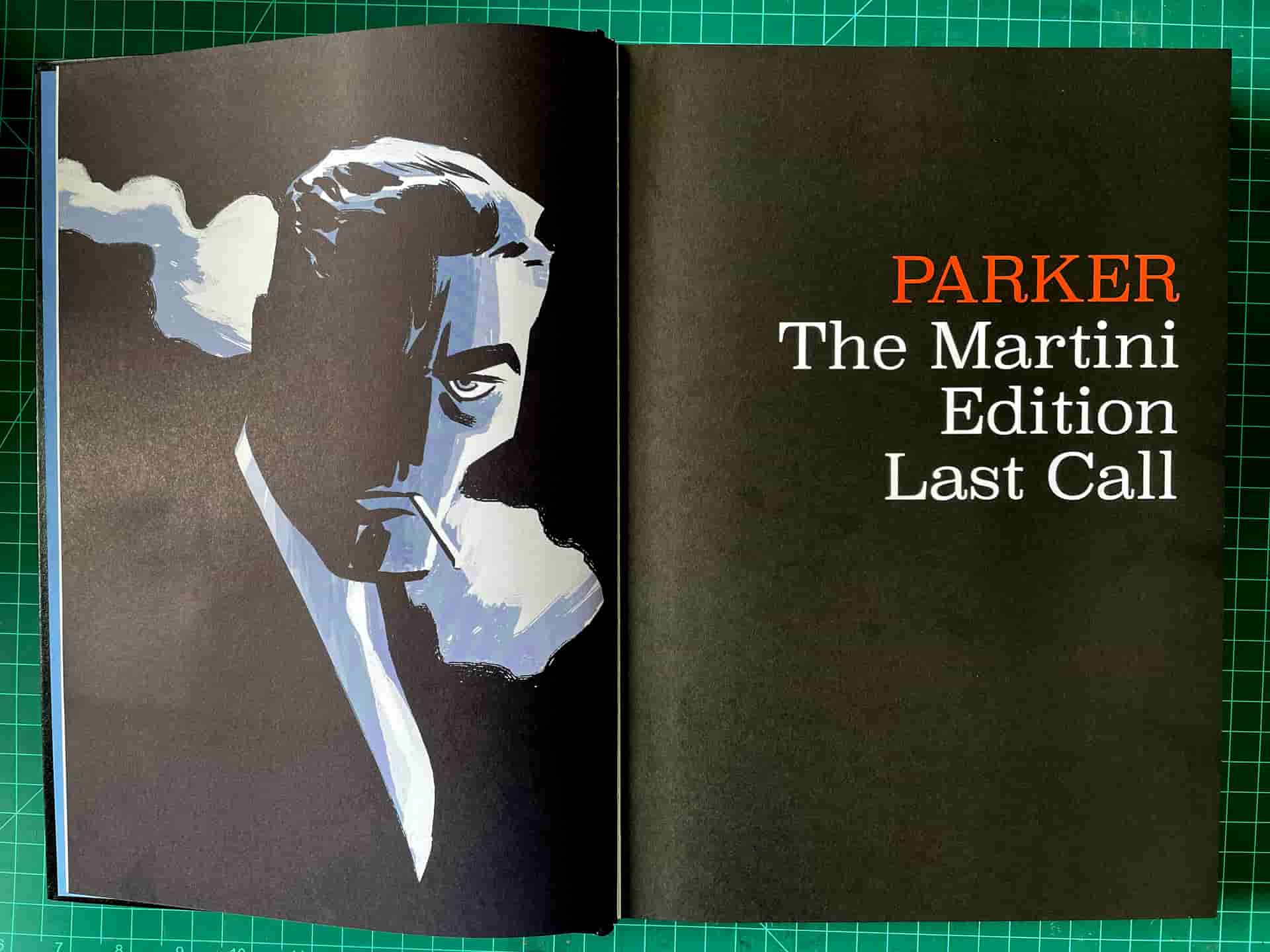
Richard Stark’s Parker by Darwyn Cooke
somehow i missed the boat with Darwyn Cooke. maybe it’s because i’m more of a Marvel reader and Cooke worked mostly on DC properties? anyway, in theory, i should be a Darwyn Cooke fan. Cooke works with a bold, simplified line — similar to guys i love like David Mazzucchelli, Frank Miller, Paul Grist, Seth. like Seth in particular, there’s an old-timey, mid-century affectation to Cooke’s work. really beautiful stuff.
i’m also a big fan of crime fiction comics. Stray Bullets, Sin City, Criminal, Scalped (and adjacent series like Sandman Mystery Theatre, Gotham Central, Kane). so when i got a chance to buy a cheap used copy of The Martini Edition: Last Call at the used bookstore…
…it only took me… ahem… three weeks to make up my mind to buy it.
see, the thing is, i’d read The Hunter, the first of the Parker novels, a few years back. this was after i’d read a very enthusiastic review of the series somewhere or another on the web, which had lead me to expect great things. but Parker is a difficult character to root for. a humorless, stone cold killer whose thoughts don’t extend much beyond his next score and the liquor and women he’ll spend it all on.
there’s no Jules Winnfield redemption arc for Parker, nor is there a Vincent Vega he’s-gonna-get-what’s-coming-to-him karmic fate awaiting him. Parker is brutal and unstoppable. a bit too one dimensional for my tastes.
the first story in the book is The Score. it opens on a wordless sequence. Parker is tailed from a hotel to a dark alley. the tail thinks he’s got the drop on Parker but, of course, nobody ever has the drop on Parker. Parker sends the man straight into the afterlife with one punch.
the sequence reads a bit like an animatic, which is likely due to Cooke’s background in animation. over the course of six pages, there are no fewer than eight multi-panel sequences that reuse the same “shot,” changing only the pose and position of Parker and the tail in the frame to communicate the action of the two characters (like one might in a storyboard).
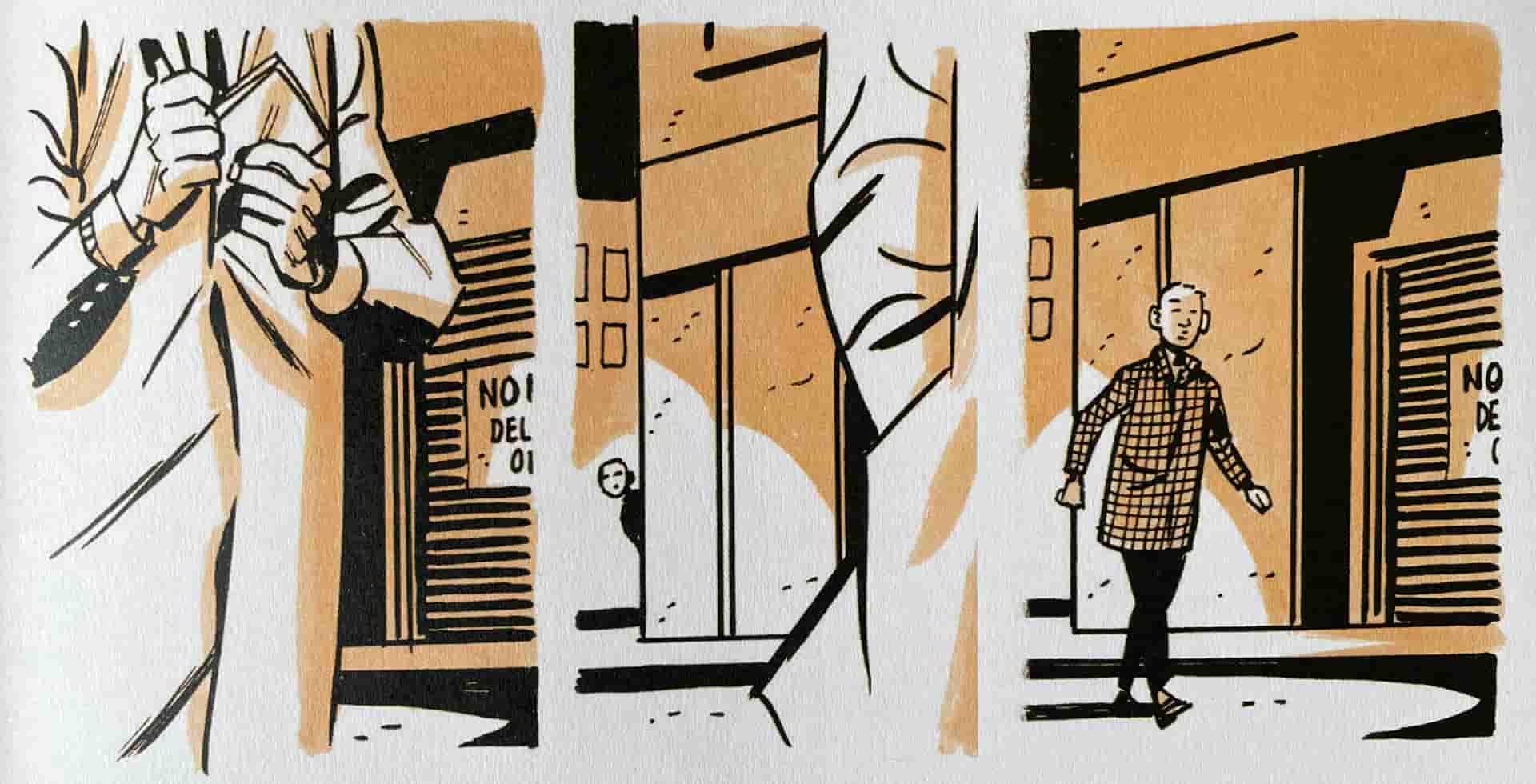
i think the sequence, the way Cooke arranges his panels from page-to-page, highlights his strength as a designer. and if you like this sequence, you’re probably going to enjoy Cooke’s style of storytelling, because he does this a lot.
and there are some very good pages. some great panels. some very clever layouts. the way Cooke uses color in these stories is similar to how i used color in Tiny Dracula #1 — i can say from experience that it isn’t an easy thing to do well. and Cooke knocks it out the park (i would love to know how he did it — because i don’t think it’s digital coloring).
by the end of the book, despite my reservations about the Parker novels, Cooke had won me over. the comics are good fun.
and so now it’s on a list of things that i really enjoyed from 2025.